-bf52bc-400px.jpg)
Data Centers, Elections & Campaigns, Energy & Environment
Democrats Try to Flip Utility Commissions Over Energy Costs
November 1, 2026 | Billy Culleton
Key Takeaways:
As the vote counts begin rolling in tonight, we'll be keeping a close eye on a few dozen races as both a signal of the magnitude of a potential Democratic wave (or, alternatively, a fizzle) that the polls and fundamentals are pointing towards as well as key thresholds and offices that will enable or block single party control over policymaking in key states. Our full watch list of elections and ballot measures can be found on our results page, but below is the quick version.
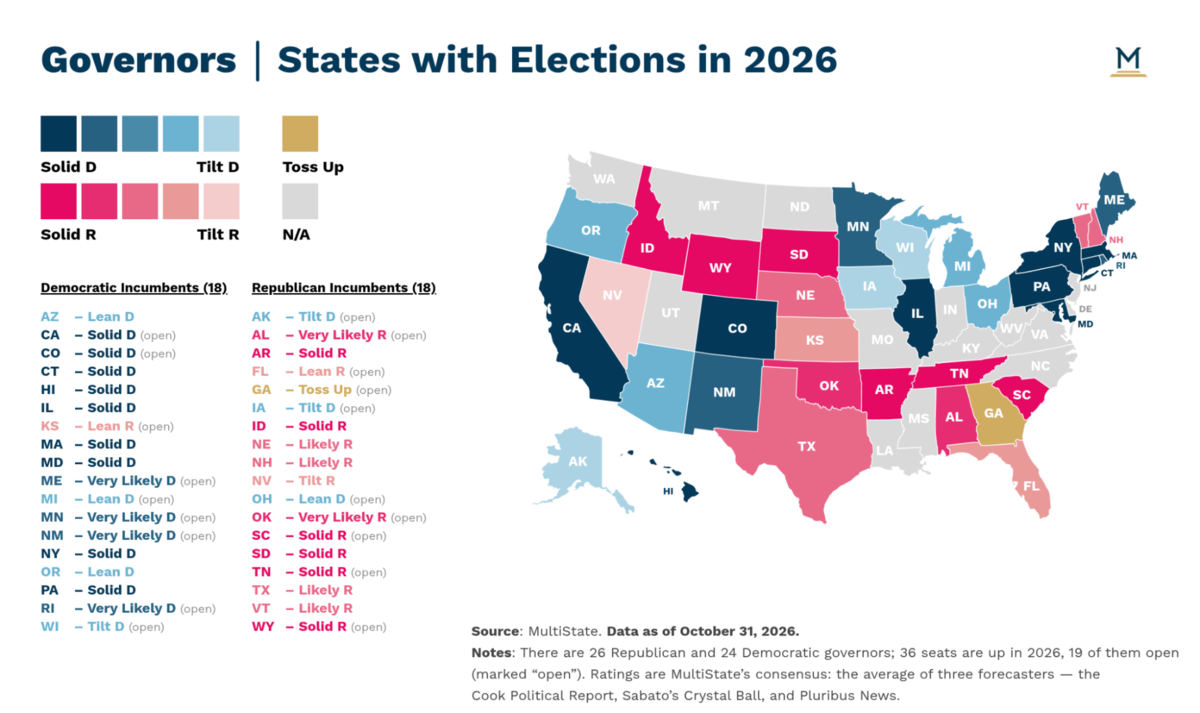
Of the 36 governor elections this year, 11 are highly competitive (toss-ups, tilts, and leans) and another 10 are mildly competitive (likely and very likely ratings), leaving only 15 safe seats. Compared to most cycles, this is a highly competitive bunch. But the gubernatorial elections we'll be keeping a close eye on tonight are the potential flip in Ohio, the hard-to-predict 4-way ranked-choice vote in Alaska, the most vulnerable incumbent governor in Nevada, and the long-shot — but if it flips the GOP is in for a long night — race in Texas.
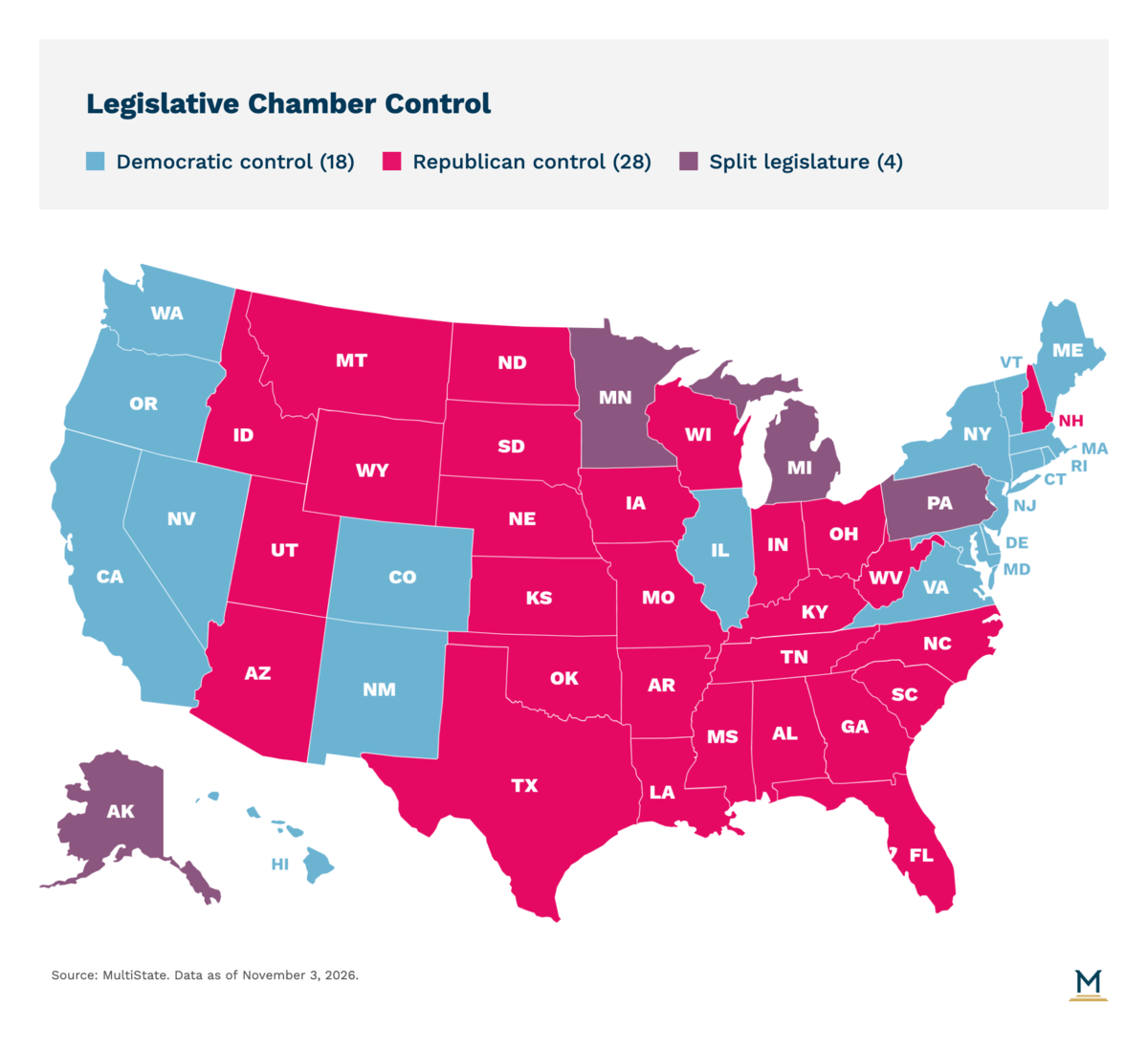
No surprises here as this is essentially the same list of competitive chambers we previewed in February. Democrats only need to flip one seat in the tied Minnesota House and four seats in the Michigan House to take back the two trifectas they gained in the 2022 cycle and then lost in 2024. They'd also need to flip three seats in the Arizona Senate, four in the Arizona House, and three seats in the Pennsylvania Senate to take control of those long-sought-after chambers — but those last few seats are a tough get even in a good cycle for Democrats. Our full preview shows exactly which legislative races we expect to be the bellwethers worth watching on election night to monitor those chamber flips.
Rounding out the competitive chambers are the Wisconsin Senate and Assembly, where Democrats need two and five seats, respectively, with the Senate squarely in their sights and the Assembly a bit of a tougher get. New court-ordered maps are the reason this long-held GOP legislature is in play at all. While a good cycle should swing the 400-member New Hampshire House towards the Democrats, breaking up a GOP trifecta, the five seats needed to win the Senate is far less likely but doable. Finally, if Democrats are having a particularly good night, chambers like the Georgia House could be in play, where ten seats would need to be flipped to take control. If that's the type of night we're seeing, then keep an eye on the Texas and North Carolina house chambers too.
Trifecta
A state government trifecta occurs when one political party holds the governorship and majorities in both chambers of the state legislature, allowing that party to enact policies without opposition from the other party.
Ranked Choice Voting
Ranked Choice Voting is an electoral system in which voters rank candidates by preference on their ballots. If no candidate wins a majority of first-choice votes, the lowest-ranked candidates are eliminated and votes are redistributed until one candidate has a majority.
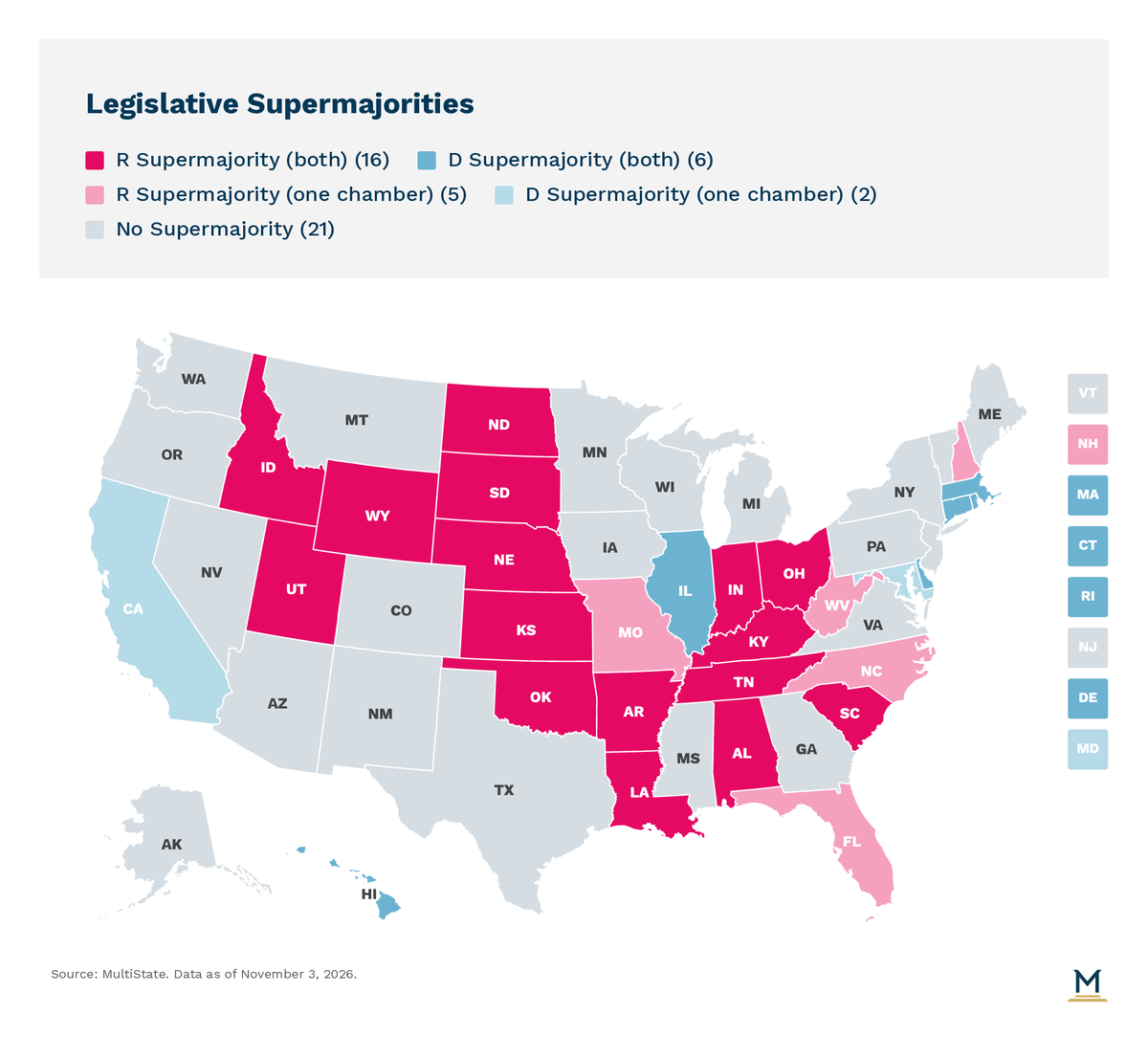
With a lot of legislative seats up for grabs in a big swing cycle, we could see a lot of the current 22 state legislatures with veto proof supermajorities shift. If Democrats are going to protect the vetoes of their governors, sitting or newly elected, it will be particularly important that they break up supermajorities in North Carolina and Florida, where Democrats only need to flip one seat, as well as Ohio and Kansas, which would need flips in 6 and 5 house seats, respectively. And in Nebraska, Democrats aim to break up the current GOP supermajority that can overcome a Democratic filibuster.
Of the 145 statewide ballot measures voters will decide on today, we have a few of particular interest. First, we're suckers for procedure, and nothing is more meta than ballot measures that decide on ballot measure procedure. That's what we've got in Missouri and Montana this year, where approval by the voters would make the initiative systems a fundamental right in those states, protecting them from lawmakers. Another fun procedural one is Alaska's decision, once again, on whether to keep their Ranked Choice Voting system. And turning to substantive policy decisions, California has its high-profile billionaires tax proposal and Missouri has the big abortion measure this cycle.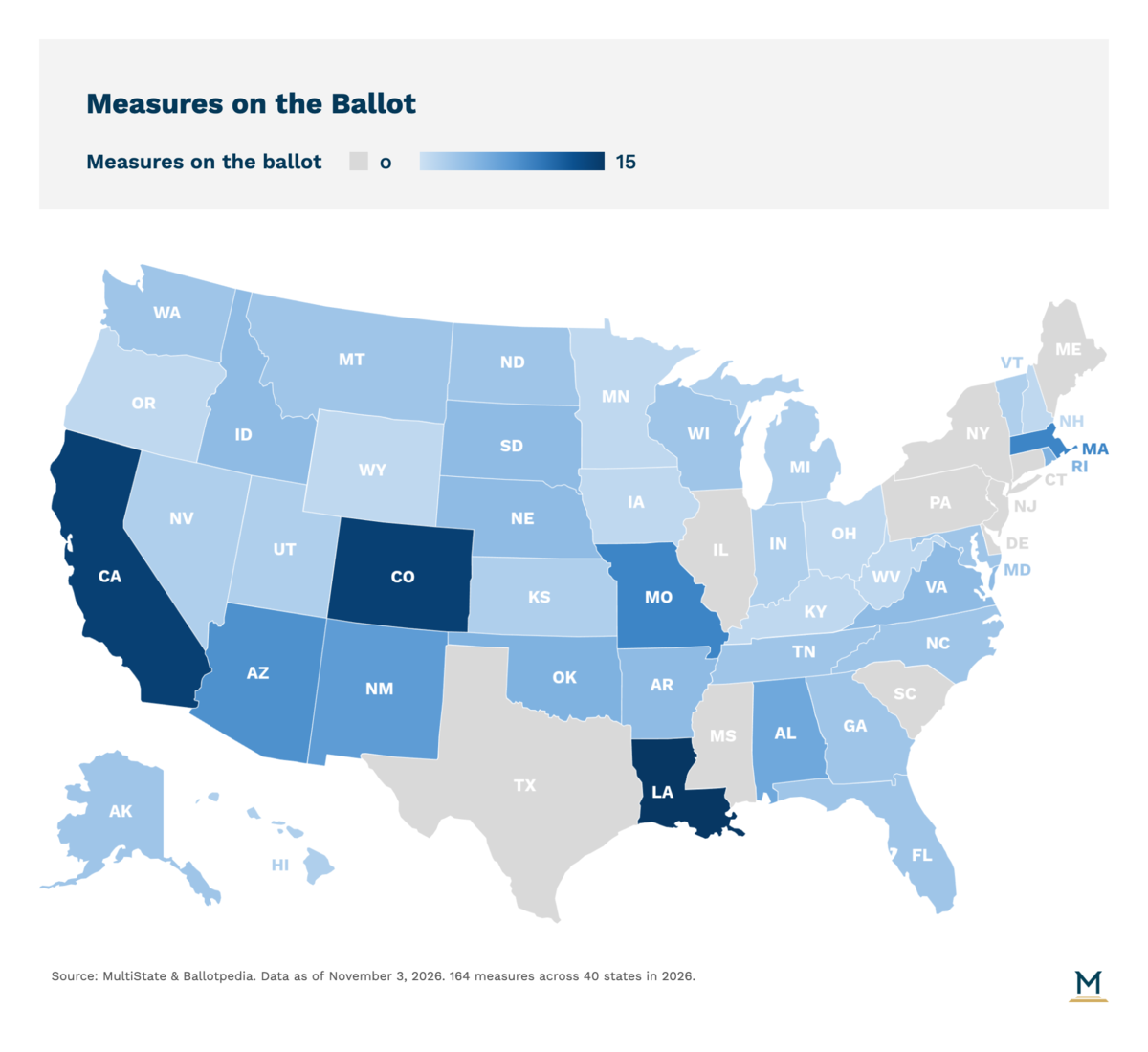
As for our predictions for tonight, our earlier analysis of overperformance in this year's state legislative special elections would net Democrats roughly 424 to 593 state legislative seats. Our friends at State Navigate are predicting a net 425 seats pickup for Democrats. We think that a 400-500 range is in line with our expectations. With expectations for a Democratic wave so high this year, we think a repeat of their 2018 cycle would be the floor (+307 state legislative seats) and anything below that would be a relative win for Republicans. We don't expect that Democrats will reach the decade-shifting cycle that Republicans had in 2010 (+679 seats). We also expect Democrats to capture a majority of the states governorships for the first time in 16 years. This could very well be the biggest state elections cycle we've covered in the past 15 years, so for that alone, we're excited to see how this plays out.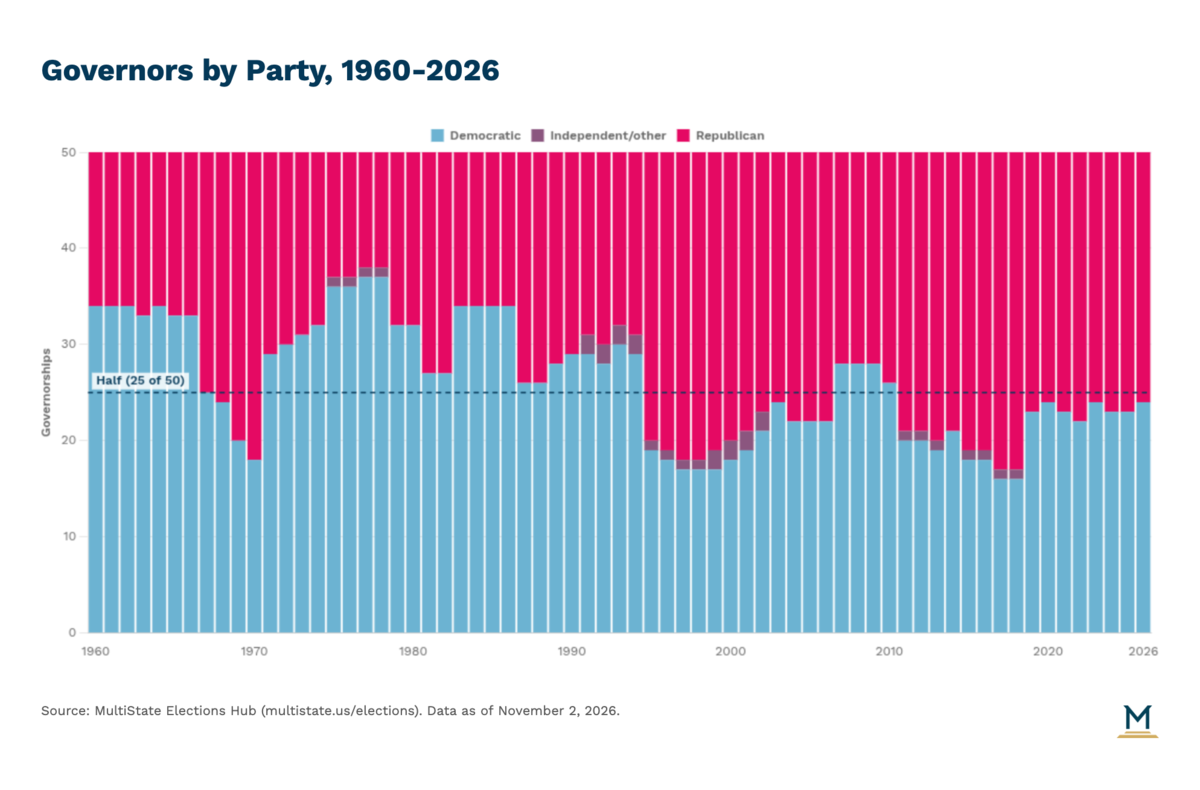
Please visit our elections results page tonight and the rest of this week for real-time results and indispensable analysis from MultiState.
Federal and state elections and redistricting can have significant policy and regulatory implications for businesses and organizations. If your organization would like to further track federal and state elections, please contact us.
How many state legislative seats are Democrats projected to gain in the 2026 elections?
Analysts project Democrats will net roughly 400 to 500 state legislative seats, with a range of 424 to 593 based on overperformance in this year's special elections. State Navigate is predicting a net pickup of 425 seats, and a repeat of the 2018 cycle, which yielded plus 307 seats, is considered the floor.
Which gubernatorial races are considered the most competitive in 2026?
The most closely watched governor's races include Ohio, Alaska, Nevada, and Texas. Nevada's incumbent governor is described as the most vulnerable, Texas is considered a long-shot flip, Alaska features a hard-to-predict four-way ranked-choice contest, and Ohio is seen as a potential flip.
Which state legislative chambers could flip to Democratic control in 2026?
Democrats need to flip one seat in the Minnesota House and four seats in the Michigan House to reclaim trifectas lost in 2024. Additional targets include the Arizona Senate (three seats), Arizona House (four seats), Pennsylvania Senate (three seats), Wisconsin Senate (two seats), and Wisconsin Assembly (five seats).
What ballot measures related to abortion and taxes are on state ballots in 2026?
Missouri has a major abortion measure on the ballot, and California has a high-profile billionaires tax proposal for voters to decide. Both are among the substantive policy decisions highlighted across the 145 statewide ballot measures being decided.
Which states have ballot measures that could affect the initiative process itself in 2026?
Missouri and Montana both have ballot measures that, if approved, would make the initiative systems a fundamental right in those states, protecting them from lawmakers. Alaska is also voting on whether to keep their Ranked Choice Voting system.
November 1, 2026 | Billy Culleton
October 20, 2026 | Bill Kramer
October 20, 2026 | Mary Kate Barnauskas